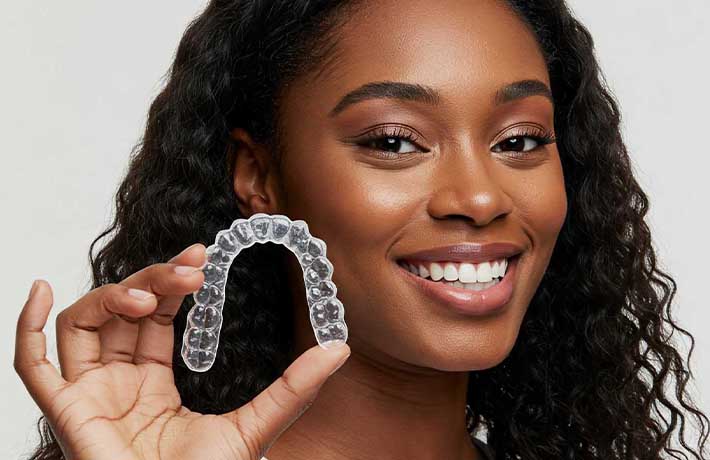
Clear aligners have transformed modern orthodontics. For many adults exploring teeth straightening options, Invisalign offers a discreet and flexible alternative to traditional braces. But one of the most common questions remains:
Am I suitable for Invisalign?
Understanding Invisalign suitability depends on several factors, including the complexity of alignment issues, oral health, lifestyle habits, and treatment goals. This guide explains who may be a good candidate, what conditions Invisalign can treat, and when alternative options might be recommended.
What Does Invisalign Treat?
Invisalign is designed to address a wide range of mild to moderate orthodontic concerns.
It may be suitable for:
- Crowded teeth
- Gaps between teeth
- Mild to moderate overbite
- Underbite
- Crossbite
- Open bite
- Minor relapse after previous braces
Each case is unique, and suitability can only be confirmed after a professional assessment.
Sign 1: Mild to Moderate Alignment Issues
Invisalign is highly effective for common alignment concerns. If teeth are slightly crowded, spaced unevenly, or mildly rotated, clear aligners can often achieve predictable results. Advanced digital treatment planning allows clinicians to map tooth movement precisely. For complex or severe bite issues, traditional orthodontic approaches may sometimes be recommended instead.
Sign 2: Healthy Teeth and Gums
Before starting Invisalign, oral health must be stable.
This means:
- No untreated decay
- No active gum disease
- Good oral hygiene habits
Orthodontic treatment applies pressure to teeth. If gums or supporting structures are compromised, treatment may need to be delayed until issues are addressed.
A routine dental check-up often forms part of the initial assessment.
Sign 3: Commitment to Wearing Aligners
Invisalign aligners must be worn 20–22 hours per day.
They should only be removed for:
- Eating
- Drinking anything other than water
- Brushing and flossing
Patients who are disciplined and consistent tend to achieve the best results. If aligners are not worn as instructed, treatment time may increase, and results may be compromised.
Sign 4: Adults Seeking a Discreet Option
Many adults prefer Invisalign because it:
- Is nearly invisible
- Fits comfortably around professional life
- Does not involve metal brackets or wires
- Can be removed for important events
For working professionals in Southwell, discretion is often a major deciding factor.
Sign 5: Realistic Expectations
Invisalign can produce significant improvements in alignment and aesthetics.
However, it is important to understand:
- Results take time
- Compliance affects outcomes
- Complex cases may require refinements
Clear aligners are not an instant solution, but with commitment, they may achieve highly satisfying results.
Who May Not Be Suitable for Invisalign?
In some situations, aligners may not be the ideal solution.
Examples include:
- Severe skeletal bite discrepancies
- Significant jaw misalignment
- Advanced periodontal disease
- Individuals unable to commit to daily wear
Alternative orthodontic treatments may be discussed if Invisalign is not appropriate.
Age Considerations
Invisalign is popular among:
- Adults
- University students
- Older teenagers
There are specific aligner systems designed for teenagers, which include features to monitor wear compliance. Suitability is based more on dental development and responsibility than age alone.
The Assessment Process
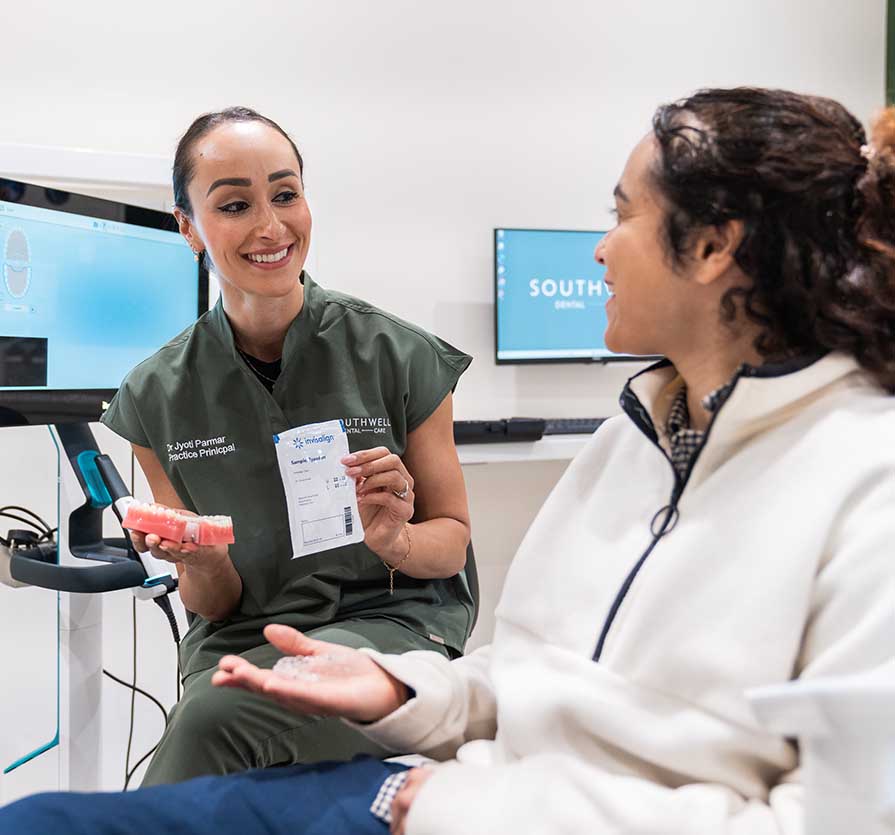
If Invisalign suitability is being considered in Southwell, the process typically involves:
- Clinical examination
- Digital scanning of teeth
- Bite analysis
- Discussion of goals
- Review of projected treatment outcome
Digital technology allows patients to visualise how teeth may look after treatment.
How Long Does Treatment Take?
Treatment length depends on complexity.
- Mild cases: 6–9 months
- Moderate cases: 12–18 months
- Complex cases: potentially longer
Consistency with aligner wear plays a crucial role in staying on schedule.
Lifestyle Benefits
For many adults, Invisalign aligns well with busy routines.
Benefits include:
- No dietary restrictions
- Easier brushing and flossing
- Fewer emergency appointments compared to braces
- Comfortable, smooth aligners
Because aligners are removable, maintaining oral hygiene can be simpler than with fixed braces.
Frequently Asked Questions
1. Can Invisalign fix an overbite?
Mild to moderate overbites may be treated with Invisalign, depending on individual assessment.
2. Are the aligners painful?
Some pressure may be felt when switching aligners, but discomfort is typically temporary.
3. What happens if aligners are not worn enough?
Teeth may not move as planned, potentially extending treatment time.
4. Do attachments make Invisalign visible?
Attachments are small and tooth-coloured, designed to remain discreet.
5. Can smokers use Invisalign?
Smoking while wearing aligners may stain them. Aligners must be removed before smoking.
6. Are aligners faster than braces?
Treatment times vary. Some mild cases may be completed more quickly, but this depends on complexity.
7. Will speech be affected?
There may be a slight adjustment period, but most people adapt quickly.
8. Are the aligners safe?
Invisalign is a well-established orthodontic treatment. Suitability is assessed individually.
Considering Invisalign in Southwell?
Determining Invisalign suitability requires a personalised assessment. Clear aligners may offer a discreet and effective solution for straightening teeth, improving smile aesthetics, and enhancing oral hygiene. However, professional evaluation is essential to ensure treatment is appropriate and aligned with expectations.
Booking a consultation provides clarity on suitability, treatment duration, and projected outcomes. A straighter smile may be more achievable than many people realise.